03
The Two Sources of Every Reaction
Every bodily reaction is the result of a pattern match between the present stimulus and a stored library of patterns. That library has two very different compartments, and knowing which one you are looking at decides whether you interpret correctly or wrongly.
The body does not react to reality — it reacts to a match
This is the starting point, and it is not intuitive at all. When someone flinches back, what made them flinch is not the danger; what made them flinch is that a pattern in the library has just matched. Pattern matches, reaction runs, whether or not reality is dangerous.
That library has two compartments. Telling them apart is the first thing to do before any interpretation.
Source A — the personal experience network
Someone bitten by a dog as a child will be afraid of dogs later. Everyone knows that sentence. The notable part is why, and that part gives us a formula.
The formula for a defensive pattern
THE PATTERN ON RECORD  =  (a harmful event)
                       ×  (a time when the subject CANNOT resolve it)
                       ×  (the level of harm, real or perceived)
The middle term is the decisive one, and it is usually missed. It is not the objective level of danger that creates a strong pattern — it is the gap between the danger and the subject’s capacity to handle it at that moment.
This is why a small event at five can create a stronger pattern than a large event at thirty-five. The five-year-old has no way to handle the dog; the thirty-five-year-old has. Same dog, two entirely different patterns.
Pattern generalisation — and this is where the trouble is
A pattern does not require the stimulus to be identical. It needs only to be similar in appearance or in feel.
The operational consequence — and it is a large one
What has to be internalised before reading anyone
A defensive reaction does not prove that a real threat exists. It proves only that a pattern has matched.
In this field that error has a name: the Othello error. In the play, Othello reads Desdemona’s fear as evidence of betrayal; in fact it was the fear of not being believed. From the outside the two look identical.
In real life this error turns up everywhere there are consequences. An innocent person in an interrogation room reacts almost exactly like a guilty one, because the consequence comes from the verdict, not from the facts. They are not afraid of being caught for something they did; they are afraid of being wrongly judged. And that fear produces precisely the signals the observer is looking for.
Chapter 28 will give you quantitative data on how common this is. For now, just remember the name.
Source B — the evolutionary network
The second compartment holds reactions that predate personal experience. They are shared across the species, appear in children born blind and deaf, and in many cases appear in other primates as well.
| Reaction | Evolutionary function |
|---|---|
| Eyes closing under a sudden impact | Protecting the cornea |
| Smiling | A sign of submission and harmlessness, developed from the primate “fear face” |
| A nod means agreement | An unfinished bow — that is, submission |
| A head shake means refusal | A sated infant turning its head away from the breast |
| The shrug | A three-part cluster: open palms, shoulders raised to cover the throat, eyebrows raised in submission |
| Raised eyebrows on recognising someone | A greeting at a distance — present in monkeys and chimpanzees |
| Showing the palms | “I carry no weapon” |
| A hand raised to cover the throat | Protecting the rank one lethal point |
The seven universal expressions
There are seven facial expressions independent of race, culture, ethnicity, nationality, sex, age and religion. They have been verified across twenty-one cultures, including tribes entirely isolated from outside media.
Source C — variation by population
There is a third compartment, smaller and narrower, worth mentioning in order to avoid one kind of misreading. Evolution under different geographical conditions produced systematic differences between populations: cold tolerance, muscle mass, and — important for this book — the size of the safety zone and the frequency of touch.
The key point: source C affects parameters, not meaning. Someone raised in a sparsely populated region needs more space, but when that space is invaded their reaction is exactly like everyone else’s. Chapter 09 will give you the full correction table.
The typical error source C produces
You measure the distance the other person keeps, see that it is larger than normal, and conclude “this person does not trust me”. That may be right. It may also be that they grew up in a region where the normal figure is simply larger. You have just read a population constant as though it were a situational variable. This is why the baseline law in chapter 05 exists.
Telling source A from source B in practice
Mid-conversation you have no time to analyse the evolutionary origin of a gesture. But you do have a quick test, and it rests on an observable difference.
Marks of source B — species-wide
- Appears in everyone in the room, not just this person
- Triggered by a physical event or a shared social situation
- Timing coincides exactly with the stimulus
- Example: the whole room raises its eyebrows when a guest walks in
Marks of source A — this person only
- Only this person has it, the others do not
- Triggered by a topic, a word, a name
- Intensity out of proportion to the stimulus
- Example: one person alone stiffens at the mention of a place name
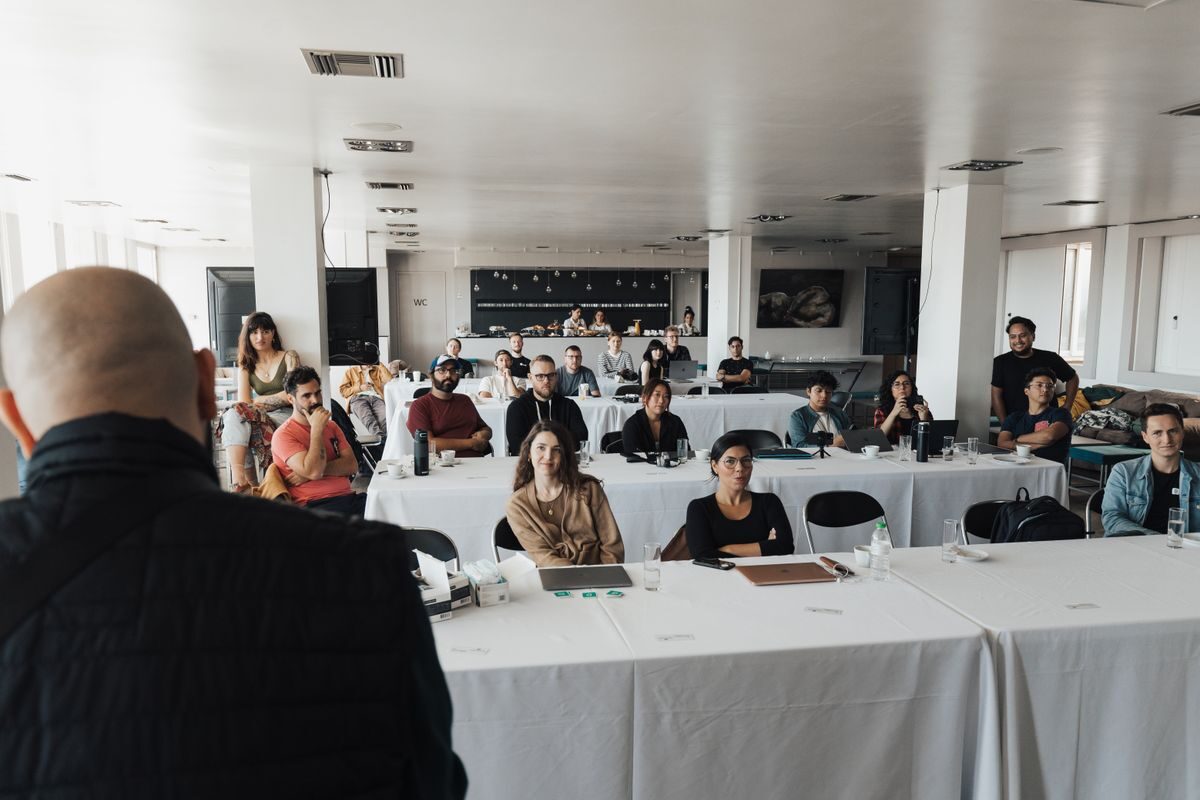
This distinction has a very concrete practical value: source B is noise, source A is signal. When the whole room does something, that something says nothing about any individual. When one person does something nobody else does, and it is tied to a topic — you have just found a point to come back to.
Chapter exercises
One. Write down three things that make you react defensively out of all proportion. For each one, try to trace when the pattern was laid down, and what capacity you lacked at the time.
Two. In your next meeting, mark every reaction that the whole group shares. Cross them out. What is left is data.
Three. Recall a time you were sure someone was hiding something because they seemed anxious. Ask again: if they were entirely innocent but afraid of not being believed, how would they look any different?
Chapter summary
- The body does not react to reality — it reacts to a match. Pattern matches, reaction runs, before consciousness can intervene, whether or not reality is dangerous.
- The formula for a defensive pattern: a harmful event × a moment when the subject lacked the capacity to deal with it × the actual or perceived level of harm. The middle term is the decisive one, and it is usually missed.
- So a small event at five can create a stronger pattern than a large event at thirty-five. Same dog, two entirely different patterns.
- A pattern does not require an identical stimulus, only something similar in appearance or in feel — a length of rope is enough to run the snake reaction. This is the largest source of false positives in the whole business of reading people.
- The Othello error. A defensive reaction does not prove a real threat exists; it proves only that a pattern has matched. An innocent person in an interrogation room reacts almost exactly like a guilty one because the consequence comes from the verdict, not from the facts — and the fear of being wrongly judged produces precisely the signals the observer is looking for.
- Source B is shared across the species and appears in children born blind and deaf and in many other primates: the smile develops from the primate “fear face”, the nod is an unfinished bow, the head shake is the movement of a sated infant turning away from the breast, the open palm says “I carry no weapon”.
- The shrug is a three-part cluster: open palms, shoulders raised to cover the throat, eyebrows raised in submission.
- Seven universal expressions — surprise, fear, happiness, sadness, anger, contempt, disgust — independent of race, culture, sex, age and religion, verified across twenty-one cultures, including entirely isolated tribes. The only significant cultural difference: some cultures do not distinguish fear from surprise.
- Keep the seven expressions in their proper place: they tell you the genuine emotion at that moment, not whether the words accompanying it are true or false.
- Source C, which varies by population, affects parameters and not meaning: the size of the safety zone and the frequency of touch differ between populations, but when the space is invaded the reaction is exactly like everyone else’s. Reading a population constant as though it were a situational variable is the typical error here.
- A quick test usable mid-conversation: source B is noise, source A is signal. If the whole room does something, it says nothing about any individual. One person doing it when nobody else does, at an intensity out of proportion, tied to a topic or a name — you have just found a point to come back to.