17
The Eyes
This is the zone where folk belief goes wrong most often — and also the zone that holds the physiologically most reliable signal in the whole system. Both are true at once, and this chapter separates them.
The most consequential warning in the whole set
Before reading on, you have to take in the following three points. If you keep only one page of this chapter, keep this one.
- Gaze aversion does NOT measure deception. Twenty-three of twenty-four peer-reviewed studies have rejected it. It has never once been shown to be a reliable indicator.
- Liars usually INCREASE eye contact. Because they know what people are looking for. About seventy per cent of liars hold eye contact, and the detection rate for that group falls to about twenty-five per cent.
- The model in which “the direction of the eyes tells you whether someone is recalling an image or a sound” has no evidence of validity or accuracy. It has been rejected by a number of independent studies. It is not used as a diagnostic tool in this set.
The pupil — the signal that cannot be faked
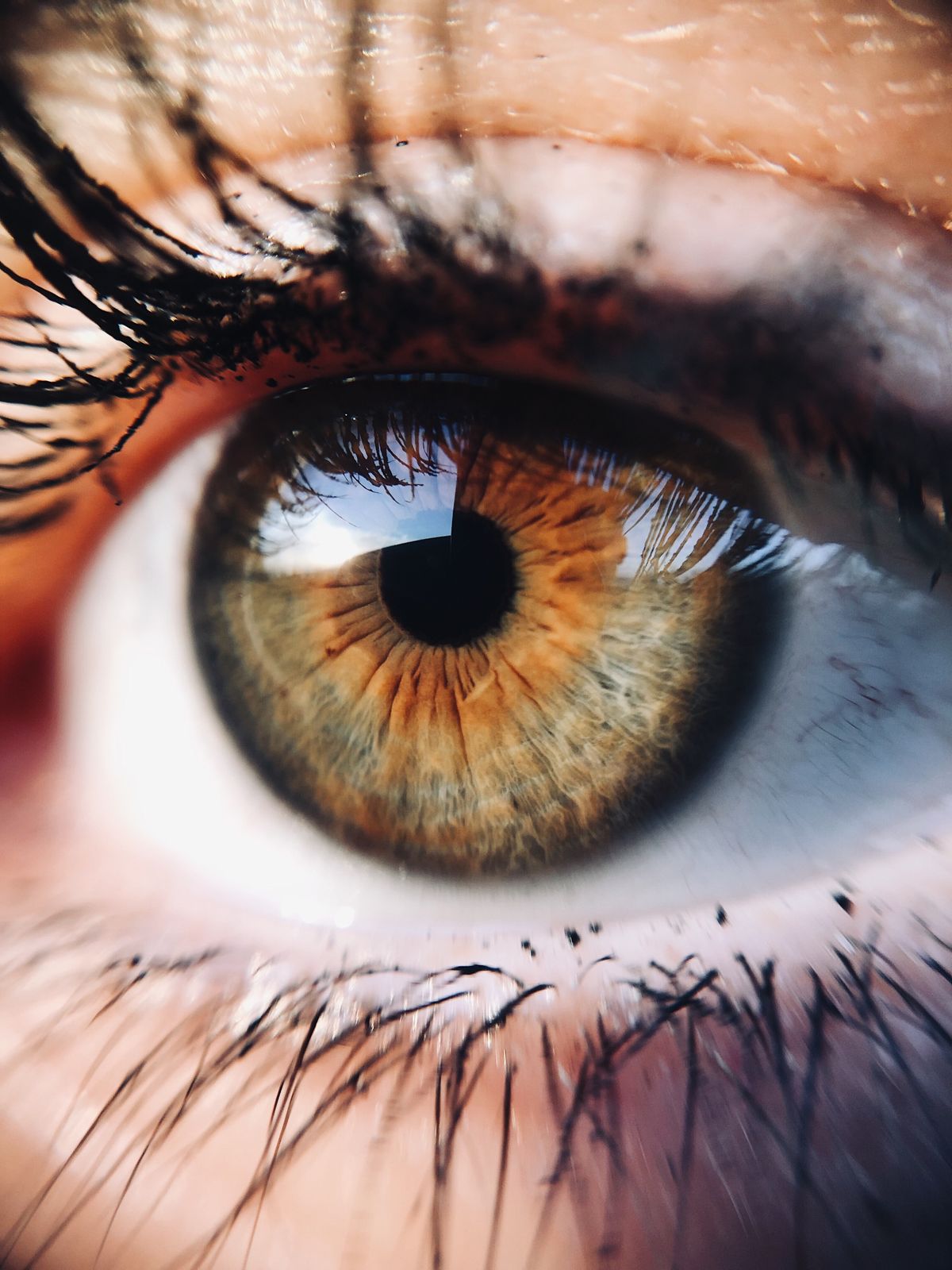
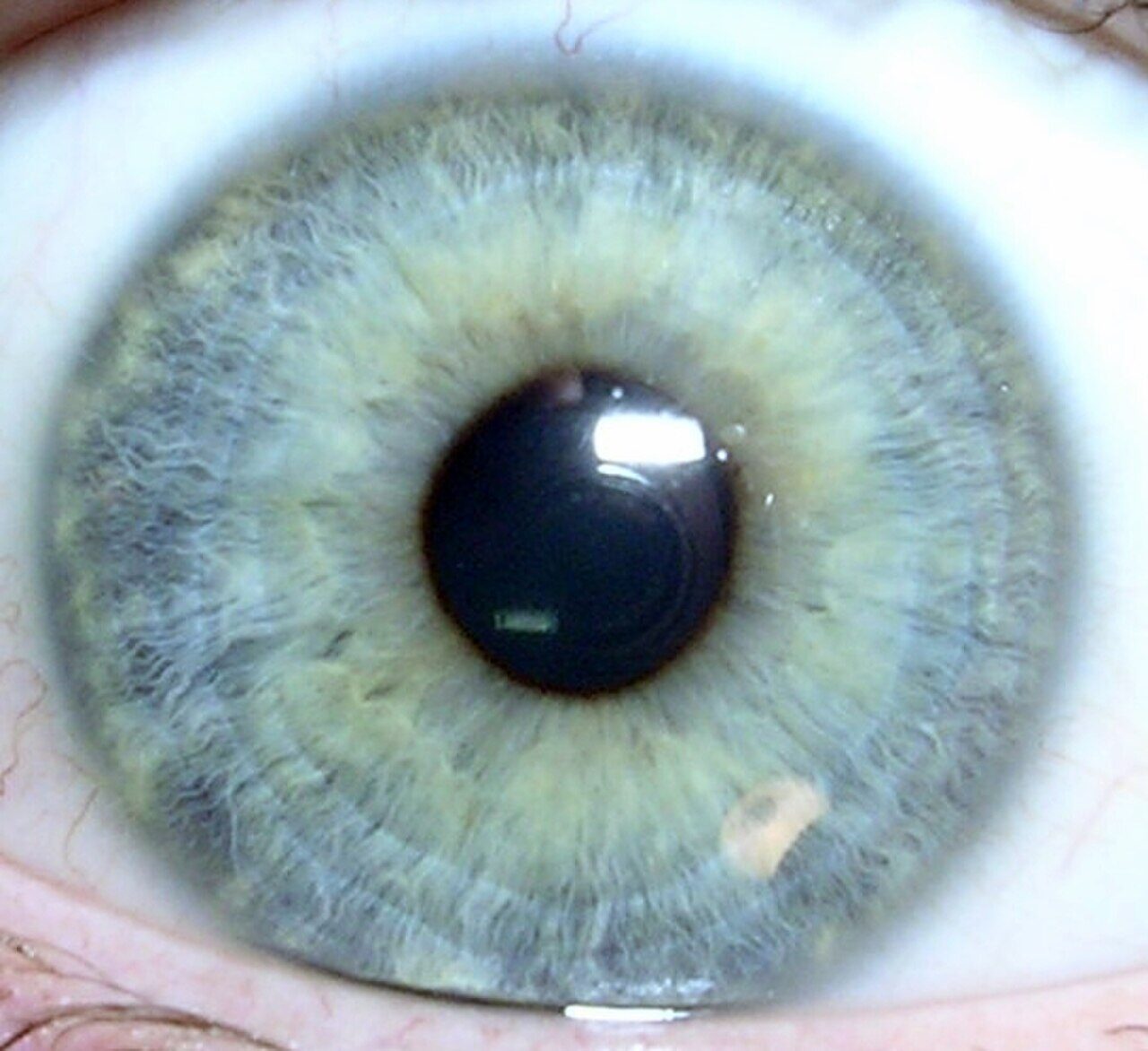
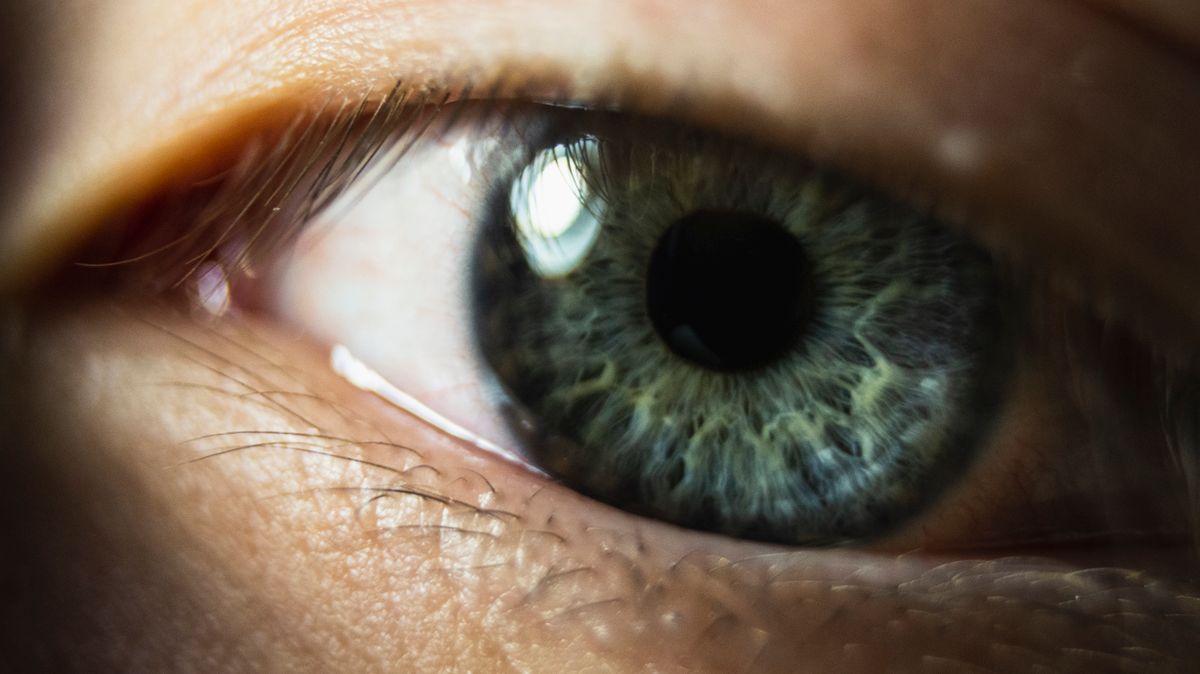
This is the physiologically most reliable signal in the whole system, because it is entirely autonomic. The pupil works on its own, outside conscious control. Nobody can train it.
Four operational consequences
Avoid dark glasses in a negotiation. They hide your signals and leave the impression that you are either staring or evading. A finding worth remembering: professional card players win less when their opponents wear dark glasses.
When someone looks back at you more than two-thirds of the time: dilating pupils mean they find you interesting; contracting pupils mean dislike, or a challenge on the way.
In commerce it has a price. A cosmetics brand enlarged the pupils of the models in its catalogue and sales rose by about forty-five per cent. Gem traders of an earlier age watched the buyer’s pupils while the price was being settled.
A compulsory limit: the pupil responds to light before anything else. Every pupil reading means something only under steady lighting. On top of that there are drugs, medication, and about one per cent of the population with a feature that keeps one pupil permanently in a different state from the other.
Blinking — and two opposing systems
The baseline at ease is about six to eight times a minute, the eye closing for about a tenth of a second each time. But the baseline figure for the individual is the one worth using — chapter 05 said why.
Here there is a contradiction in the literature that you will run into, and it needs settling plainly, because it is a large source of confusion.
Eye blocking — the best hot spot locating tool in this zone
Eye blocking is when a person holds the eyes shut longer than an ordinary blink, or brings a hand or fingers up to cover the eyes after closing them. The mechanism: not wanting to see what has just been heard or seen.
In most cases, eye blocking proves extremely accurate at marking the subjects that are giving the interviewee trouble.
The hot spot mapping procedure using eye blocking
- Ask a run of questions, one subject each, at normal speed
- Mark every instance of eye blocking — mark only, do not interpret
- The list of marked questions is exactly the hot spot list
- Come back to them later, by an indirect route — see the three-touch principle
One variant worth recording: rapidly fluttering eyelids usually go with a sensitive subject, irritation, or anger being held down. And continuous blinking with the eyes closed for two to three seconds is the body’s way of “putting you out of mind” — boredom, loss of interest, or a sense of being above you.
The eyebrows
| Gesture | Meaning | Note |
|---|---|---|
| A quick eyebrow flash on recognising someone | A universal greeting — “I recognise you and I am no threat to you” | Present in monkeys and chimpanzees. Someone who does not flash the eyebrows in greeting is judged aggressive |
| Lowering the eyebrows | Dominance or provocation | Present in other primates as well, for the same purpose |
| Raising and holding the eyebrows | Submission | — |
| Eyebrows drawn together, low in the middle | Authority and anxiety at the same time | An uncommon combination, but easy to spot once you know it |
| An eyebrow flash with the eyes opened wide | Emphasis | Belongs to the emphasis domain — see chapter 21 |
One cultural exception: in Japan the eyebrow flash of greeting is taken as suggestive and improper, so it is almost never used.
Three gaze zones — the most important active tool in the chapter
This part is not for reading other people. It is for steering the encounter, and it is the part of the whole of Zone 6 with the highest practical value.
Length of gaze — the figures
The average length of a single look: 2.95 seconds. The average length of a mutual look between two people: 1.18 seconds. These figures were measured on Westerners.
Practical recommendations
Hold 40–60% while you speak, about 80% while you listen. To build a good relationship, look back for about 60–70% of the time they look at you. The principle behind it: when A likes B, A looks at B more often; that makes B think A likes him, and in return B likes A.
Cultural exceptions — and the safe rule
In Japan, in a number of Asian countries and in South America, long eye contact reads as aggressive or disrespectful. Japanese people tend to look at the other person’s throat rather than into the eyes.
A safe rule that works everywhere: look back for exactly as long as your host looks at you. You do not need to know what their norm is — you only need to match it.
A status rule worth remembering: when two people meet for the first time, the one in the lower position looks away first. Which makes not looking away an implicit challenge — and it is read that way even when you meant nothing by it.
Two small observations, two large applications
Eyes darting constantly
When a person’s eyes dart from side to side, it looks as though they are taking in the activity in the room. In fact their brain is looking for a way out — the same action appears in monkeys and chimpanzees.
Reading: unease with what is going on.
A long look CREATES intimacy
In one experiment, both people on a date were told privately that their partner had an eye damaged in childhood and was very self-conscious about it. The two of them spent the whole evening looking deep into each other’s eyes to find the “bad eye”.
The result: intimacy ran high, and the rate of going on to a second date reached more than two hundred per cent of the average. Two-way causation, once again.
Sex differences in the field of vision
- Women have a field of view at least forty-five degrees wider on each side, above and below as well. They can look as though they are looking at your face while in fact they are watching something else.
- Men have a narrower field but better straight-ahead and long-distance vision. The consequence: they are more easily caught looking a body up and down. It is not that men look more — the narrow field is simply what gives them away.
- In presentations, women make more eye contact with the audience, particularly when they stop speaking; but while actually speaking they avoid looking straight ahead more than men do.
The first twenty seconds of an interview
The usual advice — “hold long eye contact right from the start” — is in fact wrong, and the reason is rather interesting: the interviewer needs time to take you in as a whole. If you lock their eyes immediately, you are stopping them doing that, and they will feel uncomfortable without knowing why.
Chapter exercises
One. For one week, each time you catch yourself about to conclude something from whether or not someone meets your eyes — stop and write that conclusion down. At the end of the week read the list back. The whole of that list belongs in the left-hand column of the diagram at the head of this chapter.
Two. Practise the three gaze zones with someone you trust. Say the same sentence three times, using a different zone each time. Ask them how the three felt. The difference will be larger than you expect.
Three. In your next interview or important meeting, use the first-twenty-seconds sequence. Record your own feeling about the thirty seconds that followed.
Zone 6 reading matrix
⚠️ Read only once the threshold has been crossed. Every row in the table below carries data only when the other person has left their own baseline — chapter 06. Inside the mute band, those same behaviours carry zero bits. And once the threshold has been crossed, they still give only sign, intensity, timing — not content (chapter 08).
⚠️ Read this matrix only after you have passed the filter gate at the head of the chapter. You will notice that “gaze aversion” is absent from the table. That is deliberate.
| What you see | Leading hypothesis | Must be ruled out |
|---|---|---|
| The pupil dilates on looking at you or at an object | Arousal, interest, or a solution just found | ⚠️ Light before anything else. Then medication, substances, pathology, focal distance |
| The pupil contracts | Negative, anger, a challenge on the way | Light increasing; eye drops; looking at something close |
| Eye blocking exactly on one question | ⭐ This subject is causing trouble — the best hot spot locating tool in the zone | Dust, contact lenses, dry eye, eye strain after a screen |
| Blinking clearly up on baseline | Emotional activation, anxiety | Dry eye, air conditioning, contact lenses, allergy |
| Blinking down, plus more pauses, plus less hand movement | Cognitive load — constructing, or retrieving a difficult memory | Concentrating on a hard task while being entirely honest |
| Eyelids fluttering fast | A sensitive subject, anger held down | Eye strain, a nervous tic |
| A quick eyebrow flash on meeting | Greeting, “I recognise you and I am no threat” | Japan: taken as suggestive, improper |
| Lowering the eyebrows | Dominance, provocation | Glare; short sight without glasses |
| Eyes darting constantly round the room | Unease, “looking for a way out” | Genuinely looking for a person or an object; there is real movement in the room |
| Looking back more than two-thirds of the time, plus dilated pupils | They find you interesting | A long-gaze culture; or a challenge over status |
The six traps of Zone 6
- The light trap — the largest one in this zone. The pupil responds to light far more strongly than to emotion, and the emotional range is a few tenths of a millimetre. Every pupil reading is valid only in steady light, and even then it is a pointer, not a measurement.
- The two-opposing-systems trap — more blinking is anxiety, less blinking is cognitive load. A single indicator cannot tell them apart. Use the whole trio.
- The gaze-culture trap — a long look is an insult in many places. The safe rule: look back for exactly as long as they look at you.
- The glasses trap — dark glasses wipe out the pupil signal altogether; ordinary glasses throw glare at the observer and make you think the person is evading.
- The eye-direction-model trap — the direction of the eyes does not tell you what kind of recall is going on. Weight zero, absolutely.
- The reversal trap — seventy per cent of liars hold eye contact. If you find yourself reassured because someone is looking straight into your eyes, be wary of that feeling of reassurance itself.
Zone 6 intervention
| Goal | Action | Caution |
|---|---|---|
| Ordinary contact, no pressure applied | The social gaze zone — the T between the two eyes and the mouth, about 90% of the time | The default for every encounter |
| Building the relationship | Look back for 60–70% of the time they look at you. About 80% while listening, 40–60% while speaking | Adjust for culture by following their own norm |
| A friendly greeting | Flash the eyebrows | Except in Japan |
| Opening an interview | Handshake → spend two to three seconds looking down (open the case, sort the papers) → and only then look up | The interviewer is better disposed, and the outcome is better |
| Locating hot spots | Ask a run of questions, mark every instance of eye blocking. That list is the list of subjects to come back to | Conclude nothing at all at this step |
| ⚠️ Conditional use | The power gaze zone to apply pressure, or to stop someone rambling | An interventionist technique. Governed by rule 1. Never in an intimate situation |
| ⚠️ Avoid absolutely at work | The intimate gaze zone — eyes down to the chin, down to the lower body | It causes fear or embarrassment, and the damage is very hard to repair |
Chapter summary
- Gaze aversion does NOT measure deception. Twenty-three of twenty-four peer-reviewed studies have rejected it. The same goes for the model in which “the direction of the eyes tells you whether an image or a sound is being recalled” — not used as a diagnostic tool.
- Liars usually INCREASE eye contact. About seventy per cent hold eye contact, and the detection rate for that group falls to about twenty-five per cent. Be suspicious of your own feeling of reassurance.
- The pupil cannot be faked, but it responds to light before anything else. Every pupil reading means something only when the light is steady.
- Eye blocking is the best hot spot locating tool in this zone. Ask a run of questions, mark rather than interpret, then come back by an indirect route.
- More blinking is anxiety. Less blinking is cognitive load. Two opposing systems — look at blinking on its own and you will be wrong in half the cases.
- Flash your eyebrows at anyone whose goodwill you want. It costs a fifth of a second, and failing to do it is read as aggressive. Except in Japan.
- Three gaze zones: social by default · power conditionally · intimate absolutely avoided at work. Reprimand someone in the social gaze zone and your words weaken, however loud you get.
- Look 40–60% while speaking, 80% while listening. The safe rule everywhere: give back exactly the amount of looking your host gives you — you do not need to know what their norm is.
- A long look CREATES intimacy, it does not merely reflect it.
- The first twenty seconds of an interview: do not lock eyes at once — the interviewer needs time to take you in as a whole.