18
Face
The most heavily managed zone on the body, and for that reason the zone that lies best. The key to reading it is not to read one feature at a time — it is to measure how far the features are in synchrony with each other.
The face is not a single unit
This is the organising idea of the whole chapter, and it changes the way you look.
The face is a set of semi-independent facial features: the lips, the cheekbones, the eyes, the outer corners of the eyes, the eyebrows, the eyelid folds, the nose, the ears. Each feature is under a different degree of control. The diagnostic value does not lie in any one feature, it lies in how far they are in synchrony with one another.
Someone smiling without the eyes lifting — only the mouth is smiling. The gap between the features tells you how much effort the person is making, how far the forcing goes.
A small but useful note: the ears are the feature almost nobody can control. The proportion of people who can move their ears at will is very low. When the ears redden or grow hot, that is an autonomic reaction, not a choice.
The four-level smile scale
The anatomical basis is very compact: the smile is driven by two sets of muscles, and their degrees of control are completely different.
The large cheekbone muscle
Pulls the corners of the mouth back, shows the teeth, widens the cheeks.
Controllable — conscious. This is the muscle you use for a photograph.
The ring muscle around the eye
Pulls back, narrows the eyes, creases the “crow’s feet” at the outer corners.
Not controllable — independent of consciousness. This is the muscle that betrays you.
Why photographs usually look unreal
Photographers ask you to say “cheese” because saying the word pulls the large cheekbone muscle back. But it pulls only that muscle — so it produces a level-one or level-two smile, and the photograph looks forced. The first place to check a smile for honesty is the creases at the corners of the eyes.
Asymmetry
A quick and very reliable test, based on the way the brain divides the work.
A case worth remembering
A job applicant praised his former boss without pause. The interviewer had a “hunch” that he was lying but could not say why. Playing the recording back in slow motion: every time the former boss came up, a brief smirk appeared on the left-hand side of the face. A later check showed he had been dismissed. The “hunch” turned out to be a real observation that consciousness had not yet named.
The smile is a submission signal
This explains a good deal, and it runs against the way we normally think about smiling.
Chimpanzees have two kinds of smile, and both are submission gestures. The first — mouth open, lower teeth showing, the corners of the mouth drawn back and down — carries the message “I am no threat, I am anxious”. The second — teeth bared, the corners of the mouth and of the eyes pulled up, with a sound — carries the message “I am not a threat, I am only a mischievous child”.
Consequence one — the smile after an accident
Someone who has just nearly been hit by a car will smile. That is not pleasure — it is a fear reaction borrowing the submission channel. They force a smile and then say “well, that was nearly the end of me”.
Consequence two — dominant people smile less
Figures who are seen as dominant mostly do not smile for the camera. The reason is simple: a smile is in essence a concession, and they do not want to look soft.
The most counter-intuitive finding in the whole set
There is a secondary feature worth recording: a liar’s smile appears faster than an honest one and is held longer, as though they were wearing a mask. This is a direct application of the timing law in chapter 05.
Five common smiles
| Type | Form | Meaning |
|---|---|---|
| The tight-lipped smile | The two lips pressed shut and drawn into a straight line, no teeth showing | “I have a secret or an opinion, and I am not going to share it with you.” It is the favourite smile of a woman who does not want it known that she dislikes someone. Other women all read it as a sign of refusal; most men do not |
| The crooked smile | One side smiling, the other side frowning | Sarcasm. Always deliberate — the two hemispheres pulling in opposite directions |
| The drop-jaw smile | The lower jaw is dropped to give the impression of laughter | A rehearsed smile, used to produce a cheerful reaction in a crowd |
| The sideways look with the eyes turned up | Head lowered, looking sideways, eyes turned up, lips closed | Seduction through childishness and shyness. It wakes the protective instinct |
| The wide grin | — | Very strongly regional. In some places it is the person who does not smile who gets asked “what are you angry about?” |
The opposite of the smile is the turned-down mouth — both corners drawn low. It reports unhappiness, sadness, dejection, or strain. One point worth noting: held long enough, it becomes a permanent feature, and people tend to keep their distance and make less eye contact with anyone who wears it.
Contagion and mirror neurons
In an experiment with about a hundred and twenty volunteers, electrical signals from the facial muscles were measured while they were shown photographs of happy and angry faces, with instructions to react in the opposite way to the picture.
The result: the participants could not fully control their own facial muscles. With a picture of an angry person, asking them to frown was easy, but asking them to smile was very hard. And the twitching of the facial muscles showed that they were reproducing exactly the expression they were seeing, even while trying to do the opposite.
Two consequences, and the first is a warning
You cause the very thing you measure. Walk in with a tense face and you will measure tension — your own, reflected back from the other person. This is the same warning as postural contagion in chapter 11, and it comes into play before the first signal does.
Smiling is a powerful active tool. The more you smile, the more positively other people respond to you — and that response is not entirely within their control.
Eight hand-to-face gestures connected with withholding information
The basis of this group is the image of the “three wise monkeys” — hear no evil, see no evil, speak no evil. When we see, hear or speak something false, the hand tends to go up to cover the mouth, the eyes or the ears.
The age rule — adjust your expectations before you read
age 5     : the WHOLE HAND clamps over the mouth, instantly
teenager  : only the FINGERS brush lightly around the mouth
adult     : the hand rises toward the mouth but AT THE LAST MOMENT turns into a NOSE TOUCH
The older the person, the subtler the gesture and the harder it is to spot. That is why the gestures of a fifty-year-old are far harder to read than the gestures of a five-year-old.
| # | Gesture | Mechanism and diagnostic note |
|---|---|---|
| 1 | Covering the mouth | The brain directs the hand to block the lie coming out. When the SPEAKER covers they may be hiding something; when the LISTENER covers they think you are hiding something. Variants: a fake cough; the index finger held vertically over the lips, the “hush” gesture |
| 2 | Touching the nose | When a lie is told the body releases a substance that makes the tissue inside the nose swell slightly; rising blood pressure makes the nose expand, the nerve endings tingle, and the person rubs the nose. This is a light, quick stroke |
| 3 | An itchy nose | Quite unlike number 2: a hard scratch or rub to relieve a real itch. Usually free-standing, repeated, and unrelated to the content of the conversation |
| 4 | Rubbing the eyes | “See no evil.” Men rub hard and turn the face away if the lie is blatant. Women touch lightly just below the eye, to avoid smudging their make-up, then turn the face away |
| 5 | Holding or pulling the ear | “Hear no evil.” It can also mean “I have heard enough” or “I want to speak”. In Italy the movement carries a different, insulting sense |
| 6 | Scratching the neck | The index finger of the dominant hand scratches one side of the neck below the earlobe. Exactly five times on average — rarely fewer than five, almost never more. Meaning: doubt, uncertainty. Easiest to catch when it contradicts the words: scratching the neck while saying “I understand how you feel” means they do not understand |
| 7 | Pulling at the collar | Lying produces a tingling in the sensitive tissue of the face and neck; the feeling of being suspected raises the blood pressure and brings sweat to the neck. A good way to respond: “Would you mind repeating that” or “Would you clarify that point” — this often makes someone who was about to deceive give the attempt up |
| 8 | Putting a finger in the mouth | Quite unlike the seven gestures above. This is a need for pacifying, not a sign of deception — a search for the feeling of safety a child has at the breast. Adult variants: a pen in the mouth, the arm of a pair of glasses, chewing gum. The right move is to provide a feeling of safety, not to raise the pressure |
A double warning, compulsory for the whole table above
When someone uses a hand-to-face gesture, that does not mean they are lying. It shows that they may be withholding information — and “may be” is all you are allowed to conclude.
On top of that: a great many face-touching behaviours are mistaken for indicators of deception when in fact they are only anxiety — and in some cases they indicate honesty.
A counter-example worth remembering
An interviewee suddenly covered his mouth and rubbed his nose for a few seconds before answering, then went back to being at ease. Asked about it afterwards, he explained: on hearing the question he thought of two ways of answering — one negative and one positive. While he was thinking about the negative answer and how the interviewer might react, he covered his mouth. When he switched to the positive answer, he took the hand away.
The gesture was entirely genuine. The reading “he is hiding something” was entirely wrong. This is why the cluster law exists.
The boredom scale — the presenter’s thermometer
The evaluation scale — the position of the fingers decides the meaning
| Posture | Meaning |
|---|---|
| A hand resting LIGHTLY against the cheek, NOT supporting the head | Genuine interest |
| A closed hand propping the chin or the cheek, index finger pointing up | Evaluating |
| Index finger pointing straight up the cheek with the THUMB PROPPING THE CHIN | Negative thinking, criticism of the speaker or of the subject |
| The index finger rubbing the eye or pushing it upwards | The negative thought is still there |
| The palm cupping the chin | Interest already lost, but still wanting to look interested out of politeness |
The evaluation gesture is often mistaken for the gesture of interest. The detail that separates them is the thumb: a thumb propping the chin reveals a critical attitude. And a rule about duration: the longer someone holds the evaluation cluster, the longer the critical attitude lasts — which is the sign to act at once, either by drawing them into the discussion or by finishing.
Chin stroking — the signal with the highest predictive value
The delaying cluster — when chin stroking is replaced
A person wearing glasses will take them off and put the arm of the frame in the mouth. A smoker draws on a cigarette. Someone else chews a pen or a finger. The object in the mouth allows delay, and at the same time it soothes the feeling of being pressed to answer at once.
Decoding the next step with a glasses wearer: putting the glasses back on means they want to look at it once more · folding the glasses and putting them away means they want to end the conversation · throwing the glasses onto the table means refusal.
Microexpressions — put in their proper place
| Property | Value |
|---|---|
| Duration | 1/15 to 1/25 of a second |
| Universality | Complete — independent of race, culture, sex, age, religion |
| Autonomy | Immediate, automatic, unconscious |
| Can it be trained? | Yes. Trained students reach over 70%, some over 90%; a group of senior investigators averaged over 80% after training, nearly double their initial real-time reading ability, and held it for weeks afterwards |
| Does it indicate deception? | NO. They report genuine emotion, but have no reliable relation to deception |
Four correct uses of the microexpression
One. A suspect flashes fear, distress or contempt while saying “I was nowhere near the place” → something may be being left out → dig into that very sentence.
Two. Someone flashes disgust while talking about a person, then says “he is a wonderful man” → a contradiction → dig.
Three. An informant flashes contempt when you ask them to do something → that is the level of distrust → rebuild the relationship before asking again.
Four. A witness flashes fear when talking about the suspect → they are being threatened, not lying → change strategy to protection, not pressure.
All four uses share one structure: the microexpression is used to detect a contradiction, and it is never used on its own. That is the synchrony law at work.

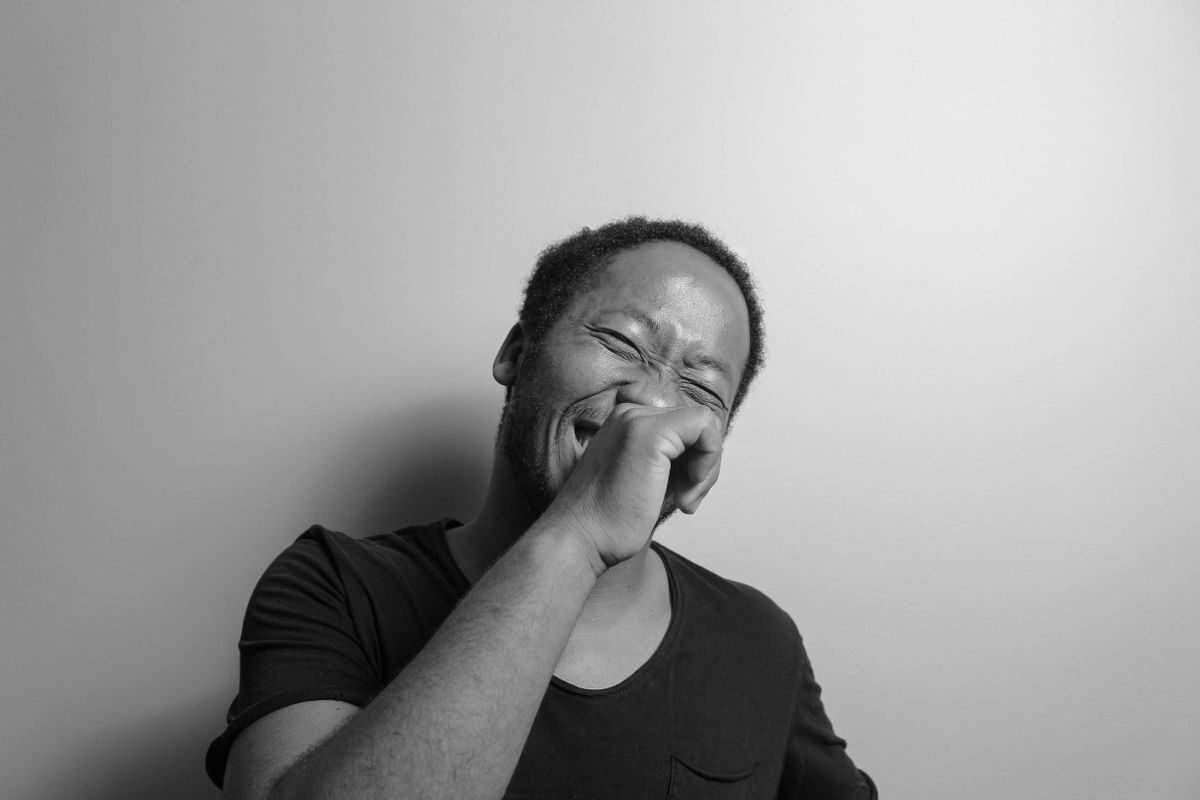

Try scoring these three photographs on the four-level scale. Then ask someone else to score them independently and compare. The gap between the two of you is an objective measure of how far your practice has got.
Chapter exercises
One. Collect twenty photographs of people smiling. Score each one on the four-level scale. Do it again a week later and compare your own two scorings.
Two. During a presentation, score the audience on the boredom scale every five minutes. Use it to decide when to cut things short.
Three. The next time you see someone stroking the chin in a negotiation — say nothing. Count to ten. Record the next signal and the outcome.
Zone 7 reading matrix
⚠️ Read only once the threshold has been crossed. Every row in the table below carries data only when the other person has left their own baseline — chapter 06. Inside the mute band, those same behaviours carry zero bits. And once the threshold has been crossed, they still give only sign, intensity, timing — not content (chapter 08).
| What you see | Leading hypothesis | Must be ruled out |
|---|---|---|
| A level 4 smile — the eyelid fold drops, the outer brow drops | ⭐ Genuine positive emotion | There is almost nothing to rule out. This is the strongest signal in the zone |
| A level 1 smile — lips only — in a setting that calls for a high level | Social, a high degree of forcing | Pain; dermal filler or facial muscle-paralysing injections; partial facial palsy; bad teeth, hence covering them |
| Clear asymmetry, the left half stronger than the right | There is a deliberate component, possibly sarcasm | Facial nerve palsy; the after-effects of a stroke; natural structural unevenness — very common |
| A tight-lipped smile, no teeth showing | “I have something I am not going to share”, or refusal | Trouble with the teeth, the breath, the lipstick; a cultural norm |
| Smiling LESS than baseline under questioning | ⚠️ A counter-intuitive reversal — it does relate to lying | Depression; pain; a culture of little expression; deep concentration |
| Smiling MORE than baseline when accused | An innocent person trying to soothe | Social anxiety |
| The smile appears fast and is held long, like a mask | A performed smile | Smiling for a camera, still or moving |
| Thumb propping the chin plus index finger pointing up the cheek | ⚠️ Criticism — NOT interest | — |
| Hand resting lightly against the cheek, not supporting the head | Genuine interest | — |
| The whole hand, or both hands, holding up the head | All interest gone | Headache; tiredness; lack of sleep |
| CHIN STROKING | ⭐ A decision is being made — SAY NOTHING and wait for the next signal | A fresh shave itching |
| Drumming the fingers, tapping a foot | ⚠️ Impatience, not boredom | A musician’s habit; restless legs syndrome |
| A light, quick touch of the nose, then the hand goes down | Information may be being held back | Allergy, a cold, dryness, a real itch — a hard scratch is a real itch |
| A flash of fear, disgust or contempt that contradicts what has just been said | ⭐ Loss of synchrony — dig into that very sentence | A microexpression is not an indicator of deception in itself |
The six traps of Zone 7
- The “double meaning” trap — see the counter-example block above. People cover the mouth because they are weighing two answers, not because they are lying. The hand-to-face group is misread more often than any other group in the book.
- The natural asymmetry trap — a human face is inherently asymmetrical. Compare only with that person’s own baseline.
- The medical trap — dermal fillers, facial muscle-paralysing injections, facial nerve palsy, the after-effects of a stroke and Parkinson’s disease invalidate the whole smile scale and the asymmetry check. Observe, or ask, first.
- The microexpression trap — if you can see it clearly, it is not a microexpression. And it reports emotion only, not deception.
- The smile-reversal trap — the belief that “a lot of smiling means something is being hidden” runs against the data.
- The contagion trap — you cause what you measure. Walk in with a tense face and you will measure your own tension, reflected back.
Zone 7 intervention
| Goal | Action | Mechanism |
|---|---|---|
| Lower the threat level, open the meeting | A genuine smile at level 3 or 4, an eyebrow flash on greeting | Mirror neurons: they copy the expression you offer, automatically |
| When you see the critical evaluation cluster — thumb propping the chin | Act at once: draw them into the discussion with a direct question, or finish | The longer the cluster is held, the longer the critical attitude lasts |
| When you see chin stroking | ⭐ SAY NOTHING. Not one more sentence. Wait for the next signal. Folded arms and leaning back = “no” → restate the offer before the refusal is spoken. Leaning forward and open hands = “yes” → move to the agreement | The strongest predictive signal in the book |
| When they put the arm of their glasses or a pen in the mouth | They are delaying — do not hurry them. Glasses back on = they want to look again; glasses put away = finish; glasses thrown on the table = refusal | The object in the mouth allows delay and soothes the feeling of being pressed |
| When you see a flash of contempt at your proposal | Stop proposing. Build the relationship first, propose afterwards | That is the level of distrust, and a proposal made at that point will be refused |
| When a witness flashes fear while talking about someone | They are being threatened, not lying → change strategy: protect, do not press | Reading this case wrong does direct harm to someone who needs help |
| Before every session | Check your own face. Is the jaw clenched? Are the eyebrows down? | It blocks the contagion trap — the largest source of wrong conclusions |
Chapter summary
- The face is not a single unit. It is a set of semi-independent facial features, and the diagnostic value lies in how far they are in synchrony with one another, not in any one feature. The ears are something almost nobody can control — ears reddening or growing hot is an autonomic reaction, not a choice.
- The four-level smile scale: lips · + cheekbones · + crow’s feet at the corners of the eyes · + the fold between the eyebrow and the lid dropping. Only level four is close to impossible to fake; crow’s feet still appear in a sophisticated fake smile. Use the scale as a measure of how much effort is being made: when the setting calls for a high level and the person is only at a low one, the forcing is that much greater. Saying “cheese” pulls only the large cheekbone muscle, which is why photographs look forced.
- When in doubt, compare the left half with the right half. The right hemisphere specialises in expression and it sends its signals to the left half of the body, so manufactured emotion shows more on the left. In a genuine smile the two sides are in synchrony.
- A smile is in essence a concession. Both of the chimpanzee smiles are submission gestures. Someone who has just nearly been hit by a car will smile — that is a fear reaction borrowing the submission channel, not pleasure. And figures seen as dominant hardly ever smile for the camera.
- Liars smile LESS; truthful people smile more. Innocent people raise the frequency of their smiling to soothe the person accusing them. The finding holds whatever the culture, and is stronger in men. A liar’s smile also appears faster and is held longer, like a mask.
- You cause the very thing you measure. In an experiment with about a hundred and twenty volunteers asked to react in the opposite way to the pictures they were shown, the facial muscles still reproduced exactly the expression they saw. Walk in with a tense face and you will measure your own tension, reflected back from the other person.
- Hand-to-face gestures grow subtler with age: at five the whole hand is clapped over the mouth, a teenager only rubs a finger around the mouth, an adult raises the hand and then at the last moment turns it into a touch of the nose. A compulsory distinction: a nose touch is a light, quick stroke; a real itch is a hard, repeated scratch with no relation to the content. A neck scratch averages exactly five times.
- That whole group of gestures licenses only the conclusion that information may be being withheld — not that a lie is being told. And putting a finger in the mouth is quite unlike the other seven: it is a need for pacifying, so the right move is to provide a feeling of safety, not to raise the pressure.
- A thumb propping the chin is criticism, not interest; a hand resting lightly against the cheek without supporting the head is what genuine interest looks like. And drumming the fingers on the table or tapping a foot is NOT boredom — it is impatience, and the faster the beat the greater the impatience.
- When you see chin stroking, say nothing and wait for the next signal. Folded arms, crossed legs, sitting back in the chair are a “no” — restate the offer before the refusal is spoken. With a glasses wearer: putting them back on means they want to look again, putting them away means they want to finish, throwing the glasses onto the table is refusal.
- A microexpression lasts 1/15 to 1/25 of a second, is entirely universal, and can be trained — trainees reach over 70%, some over 90%. But they have no reliable relation to deception: they report genuine emotion only, and are used solely to detect a contradiction, never on their own.