23
Preparation and spatial design
Two steps that happen before anyone has said a word. They decide most of the quality of everything that follows, and they are the only two steps you control completely.
Step 1 — The three-column preparation table
Before every important meeting, separate out the three things people habitually mix together. Mixing them is the source of confirmation bias, and it happens before you have met the other person.
Nine personality sketches — used as hypotheses, not as labels
There is a classic framework of nine personality types, useful as a set of preliminary hypotheses about how to approach someone. It comes with a warning that the framework itself issues, and the warning deserves to be read before the table:
Fundamentally, every scheme for labelling people is wrong in itself; applied carelessly, such schemes always produce distortion. Genuinely understanding an individual is worth far more than thorough knowledge of the box we have put that person into.
| Type | Characteristics | Approach |
|---|---|---|
| 1 · Orderly, obstinate | Frugal, tidy, cold, intellectually inclined. Decides very slowly. Reserved. Nurses grudges. Has feared and hated authority since childhood | Avoid the hostile-authority role. No threats, no pouncing on evasions. The room and you yourself should be extremely tidy. Rapport is everything |
| 2 · Optimistic | Cheerful, impulsive, inconsistent. Cannot bear pressure. Flees conflict | Approach as a mild adult presence. Reassurance opens them up; pressure closes them down. Promise nothing you cannot deliver |
| 3 · Greedy, demanding | Clinging, dependent, passive. Switches loyalty the moment they feel abandoned. Prone to depression | Do not rebuff them, but do not give in to excessive demands either. A small favour is usually enough — the real need is safety, not material gain |
| 4 · Anxious, self-centred | Frightened, but covers it with recklessness. Boastful. Extremely sensitive to being slighted | Play to the vanity — praise their courage. Do not interrupt or mock the boasting. Let the irrelevant lies pass |
| 5 · Guilt-ridden | A cruel and unrealistic conscience. May confess to something they did not do | Very difficult and very dangerous. An accusation triggers a false confession. Any information touching on their moral problem must be treated as subjective and suspect |
| 6 · Wrecked by success | Cannot bear success; always fails at the decisive point | No particular problem, unless you touch the guilt or the reasons for past failures. Quarantine that area |
| 7 · Living in a world of their own | No real attachments, but a great need to be approved of | Lies easily in order to be approved of — they say what they think you want to hear, and may not be aware that they are lying. The way out: make it clear that getting it wrong will not earn favour, and that telling the truth will not lose it |
| 8 · The “exception” | Believes life owes them a great deal, because of a real injustice in the past | Needs that injustice acknowledged before anything else can be done |
| 9 · The average | Most people | The standard procedure in chapters 24 and 22 |
A line worth remembering about the limits of argument
If you intend to produce cooperation through a rational appeal, first establish whether the other person's resistance rests on reason at all. The appeal will slide off without effect if the resistance is mainly emotional. Emotional resistance can only be dissolved at the emotional level — and in this book, “the emotional level” means empathy and rapport, not fear.
Step 2 — The four seating positions
| Position | Use when | Data |
|---|---|---|
| B1 · Corner | Interviews, intimate conversation, any time you want to be able to read the other person | Moving a chair to this position takes the tension out of the air and improves the chance of a favourable outcome |
| B2 · Cooperative | Working on the same thing, reading the same document, presenting something you want accepted | 55% of people chose this as the most cooperative position |
| B3 · Competitive | Playing chess, delivering a reprimand, or when you deliberately want to raise the other person's standing | 56% read this as competitive in a business setting. In a social setting such as a restaurant, only 35% |
| B4 · Independent | When you do not want to engage | 42% read this message as indifference or hostility |
The cost of the competitive position — measurable
People seated in the competitive position tend to speak in shorter sentences, remember less of what they have heard, and argue back more. All three effects work against you, and all three are produced by a decision you made before you opened your mouth.
Three numbers about the desk
Table shape
| Table | Creates | Used for |
|---|---|---|
| Rectangular | Competitive and defensive; each person occupies equal space and “holds a position” | Negotiation, short conversations, reprimands |
| Square | Superior-and-subordinate relations; short conversation, straight to the point | Canteens, shared work tables |
| Round | Relaxed, intimate, equal | Persuasion; families who want to treat one another as equals |
The rectangular table in a meeting — the order of power
The person at the head of the table whose back is NOT to the door holds the most power. Next comes the person at the opposite head. Then the sides.
If the person at the head has their back to the door, the one opposite becomes the most powerful — and this usually happens without either of them realising it.
An additional observation: at meeting tables the side positions tend to produce a different role — the person who attends to group relations and encourages everyone to take part. And there is a very simple trick that controls the whole thing: put name cards on the seats.
The back-and-door rule
This is one of the cheapest and most powerful interventions in the chapter, and it rests on physiological data rather than on impressions.
Respiration, heart rate, brainwave frequency and blood pressure all rise rapidly when a person sits with their back to open space, especially where people are passing. The stress rises further if their back is to an open door or a low window.
If you want them comfortable and talking
Put them with their back to a wall or a solid partition. This is the configuration to use in nearly every case.
If you want them rattled
Put their back to open space. But understand what you are doing: it lowers the quality of the information you receive. You are trading data for agitation.
Chair design
Three factors raise the status of the person seated: size and ornament (the higher the chair back, the greater the power; a swivel chair beats a fixed one because it allows movement under stress), the height of the chair from the floor, and the position of the chair relative to the other person.
Conversely, to read more: a fixed chair with no armrests forces the sitter into gestures that give away their attitude and their feelings — because the arms have nowhere to rest and no easy barrier to build.
The balanced configuration, usable in any civilian setting
A chair with no armrests · no table in between · back to the wall · with the right to leave and the right to choose where to sit · plus rapport. This configuration maximises both your ability to read and the quality of the information — instead of trading one for the other.
Large rooms — the funnel effect
Which side of the stage
| You stand on | Effect | Result |
|---|---|---|
| The audience's left | Favours the hemisphere that processes emotion | Jokes make the audience laugh harder and longer |
| The audience's right | Favours the other hemisphere | Appeals and moving stories are received better |
A related piece of data: people retain information seen in the right visual field about three times better than in the left. Which means that your “better side” is your left side — because that is the side that falls in the other person's right visual field.
An observation from the classroom
Recording the direction of a teacher's gaze every thirty seconds for fifteen minutes gives: looking straight ahead 44% of the time, looking to the left 39%, and to the right only 17%. The consequence: pupils sitting on the teacher's left are called on less often, and salespeople sitting on the customer's left side close more deals.
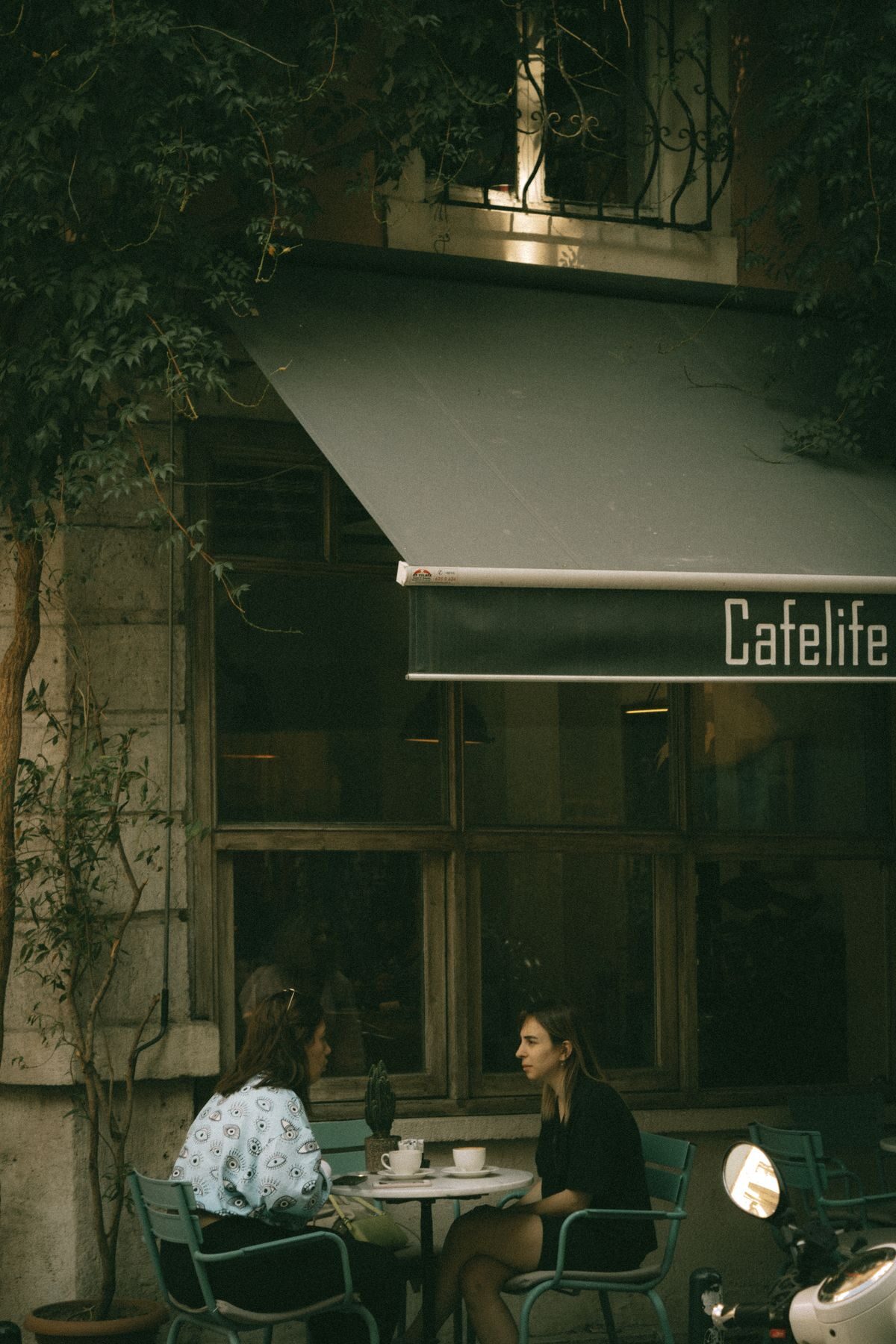
The mealtime setting
A practical piece of advice that runs against common habit: if you intend to do business over dinner, close every agreement BEFORE the food is brought out. After the meal, blood is diverted from the brain to the stomach for digestion, and people find it harder to think carefully.

Chapter exercises
One. Draw a plan of the space where you usually meet people. Mark it up: where the table is, who has their back to the door, whether the chairs have armrests, how many objects could be used as a barrier. Then change one thing.
Two. At your next meeting, move your chair to the corner position. If the chair cannot be moved, turn your body forty-five degrees.
Three. The next time you are a guest in someone's office, notice: do they sit behind the desk, or do they invite you to an area with no desk? Write it down, and compare it with how the meeting turned out.
Chapter summary
- Before every meeting, separate out the three things people habitually mix together: facts known for certain · intelligence believed to be so · inferences drawn, plus a column for the gaps to be filled. Pin it on the wall, do not keep it in your head. Mixing them means walking into the room with a conclusion and then going looking for evidence for it.
- The nine personality sketches are to be used as hypotheses, not as labels. The framework itself gives the warning: genuinely understanding an individual is worth far more than thorough knowledge of the box we have put that person into. The guilt-ridden type in particular is dangerous — an accusation triggers a false confession.
- Before making a rational appeal, establish whether the resistance rests on reason at all. Emotional resistance can only be dissolved at the emotional level — and here “the emotional level” means empathy and rapport, not fear.
- The corner position is the best one strategically: clear sight of each other, gestures easy to use, the edge of the table as a partial barrier, no splitting of territory. Moving a chair there takes the tension out of the air. 55% chose sitting side by side as the most cooperative position; 56% read directly opposite as competitive in business, but in a restaurant only 35%; 42% read the diagonal position as indifference or hostility.
- The cost of the competitive position is measurable: the person opposite speaks in shorter sentences, remembers less and argues back more. All three effects work against you, and all three follow from a decision you made BEFORE you opened your mouth.
- Three numbers about the desk: in a doctor's surgery, 10% of patients felt comfortable with a desk present and 55% with none; 76% of senior managers want a desk between themselves and their staff; and 95% of refusals in interviews are given when the interviewer is sitting behind a desk. Being invited to sit in an area with no desk is a very strong positive sign.
- A round table is equal only when everyone is of the same status. Put one person above the rest and it becomes a complete hierarchy — 68% took the person sitting opposite to be signalling that they did not want to be disturbed, 71% said they talked in a friendly way when sitting right beside someone. The trick that controls the whole thing: put name cards on the seats.
- The back-and-door rule rests on physiology, not on impressions: respiration, heart rate, brainwave frequency and blood pressure all rise rapidly when a person's back is to open space. If you want them to talk: put their back to the wall. If you want them rattled, do the opposite — but understand that you are trading data for agitation.
- The balanced configuration, usable in any civilian setting: a chair with no armrests · no table in between · back to the wall · the right to leave and the right to choose where to sit · plus rapport. It maximises both your ability to read and the quality of the information, instead of trading one for the other.
- Seating causes behaviour, it does not merely reflect it. Force a passive person into the front row and they take part and remember more; force an active one to the back and they perform worse. In the classroom, a teacher looks straight ahead 44% of the time, to the left 39%, and to the right only 17%.
- If you are doing business over dinner, close every agreement before the food is brought out — after the meal, blood is diverted from the brain to the stomach and people find it harder to think carefully. The other six contextual conditions are all free: they are only a matter of choosing the right restaurant and the right table.