13
Hands and palms
The richest source of information on the body, and also the easiest to fake. This chapter contains a little-known technique — the competence-domain scan — and a warning you must carry with you through the rest of the set.
Why the hands carry so much information
Three reasons, and because they are independent of one another they add up to a great deal.
Neuroanatomy
More nerve fibres link the hands to the brain than any other part of the body. Each hand has twenty-seven small bones, eight wrist bones, and dozens of small muscles.
Resolution
The hands and fingers are the most micro, most delicate region of the human body. They change state faster than any other region, so they mark the moment very precisely.
Position
The hands are usually in front of the body, in natural view. You do not have to glance furtively to watch them — quite unlike the feet.
The evolutionary origin of the main signal in this zone is simple: showing the palm means “I am carrying no weapon”. It is a direct parallel to a dog exposing its throat in submission.
The three-step palm scale
Between the two extremes is the vertical position — the hand held like a blade, neither up nor down. The message: equality, neither side conceding. It is the position that produces the highest trust in a handshake, and chapter 14 comes back to it.
The cost of pointing a finger
Beyond the 28% figure, two side effects are worth noting. First: listeners remember the content less well. Second: they switch to commenting on the speaker instead of listening to the content — and the adjectives they use are “pushy”, “aggressive”, “rude”. Some walk out.
The best substitute: bring the fingertips together against the thumb. The same precision when pointing to a spot, but the audience describes the speaker as “thoughtful”, “purposeful”, “focused”.
The fourth step: hidden hands
The table above has three visible steps. There is one more, and diagnostically it is the most important: no hands visible at all.
Hands in trouser pockets, hands behind the back, hands under the table, hands inside sleeves. The message: scepticism, concealment, or unwillingness to take part. The most obvious origin: children hiding their hands behind their backs when they lie.
But be careful here, because the correct use of this step is very narrow. See the warning at the end of the chapter.
The palm reversal phenomenon
This is the sharpest part of the chapter, and it is a diagnosis that most body-language material does not have.
The situation: someone is talking, palms steadily up or in the intermediate position. Then abruptly, mid-sentence, the hands turn over and stay there.
There are two and only two causes, and they lead to two completely opposite actions.
The basis of branch B — multi-domain competence
Everyone develops a multi-dimensional frame of reference: area by area, they feel either sure or unsure. A person may not be able to swim at all, but be a very good runner. Talking about swimming, they are the one who knows nothing; talking about running, they are the one who knows it all.
And the hand position follows. When a person moves into their own strong suit, the palms tend to turn down — the posture of authority. They do not decide to do it; it simply happens.
The competence-domain scan
From that observation comes a very useful and very little-known technique. It gives you a map of who this person thinks they are in which domain — something a CV never gets right.
- Prepare five to eight topics from different domains
Expertise, hobbies, family, future plans, a technical field, a social field. The further apart the better.
- Move between topics naturally, two to three minutes each
Do not dig. The aim is not the content — the aim is the hand position.
- Record the default palm position for each topic
One mark is enough: up, vertical, down, hidden.
- Read the map you get
See the table below.
Four direct applications
Recruitment — compare self-assessed competence with the competence on the CV. The gap between them is what is worth asking about.
Negotiation — know which domain to push in, and which domain they will not concede because it is home ground.
Teaching — know where the student is solid so you do not teach it again, and where they are weak so you slow down.
Investigation — distinguish “does not know” from “does not want to say”. This is the most valuable of the four.
Catalogue of hand gestures
| Gesture | Meaning | The deciding detail |
|---|---|---|
| Rubbing the palms together | Positive expectation | Speed tells you who benefits: fast and the listener benefits; slow and the one making the gesture benefits |
| Rubbing the thumb against the fingertips | Expecting money | Avoid this gesture in front of a client |
| Clenched hands | Frustration, suppressed negativity — even while smiling | Height equals the level of frustration: hands clenched at face level are harder to negotiate with than hands clenched on the lap |
| Steepled hands | Confidence, certainty | The exception to the cluster law. Two forms: the raised steeple while speaking, the lowered steeple while listening. With the head tilted back it becomes smugness |
| Hands clasped behind the back, palm holding palm | Confidence, authority | Exposes stomach, heart, groin and throat all at once: “I fear nothing” |
| Hand gripping the wrist behind the back | Frustration, holding oneself in check | The higher the grip, the greater the anger: wrist < forearm < upper arm |
| Thumbs tucked into a pocket or a lapel | High status, self-assurance | — |
| Thumbs protruding from the back trouser pockets | Superiority, and an attempt to hide it | — |
| Crossed arms with the thumbs pointing up | Defensiveness plus condescension | A double signal. Often with an asymmetrical sitting posture |
| Thumb pointed at another person | Ridicule, disrespect | Strongly irritating, especially to women |
| Face resting on the hand, fingers spread | Displaying the face to be looked at | Flirtation, not evaluation |
| Fingertips brought together against the thumb | Assertive without being aggressive | The best substitute for pointing |
Steepling: one gesture, two opposite conclusions
Reading a chess move from the hands
There is one very neat worked example, and it illustrates the whole spirit of this set.
You put a finger on a piece but do not move it. Watch your opponent:
They steeple their hands
They are confident about that move of yours — meaning they already have an answer to it. Do not play it.
They clench their hands or cross their arms
They do not like that move. Play it now.
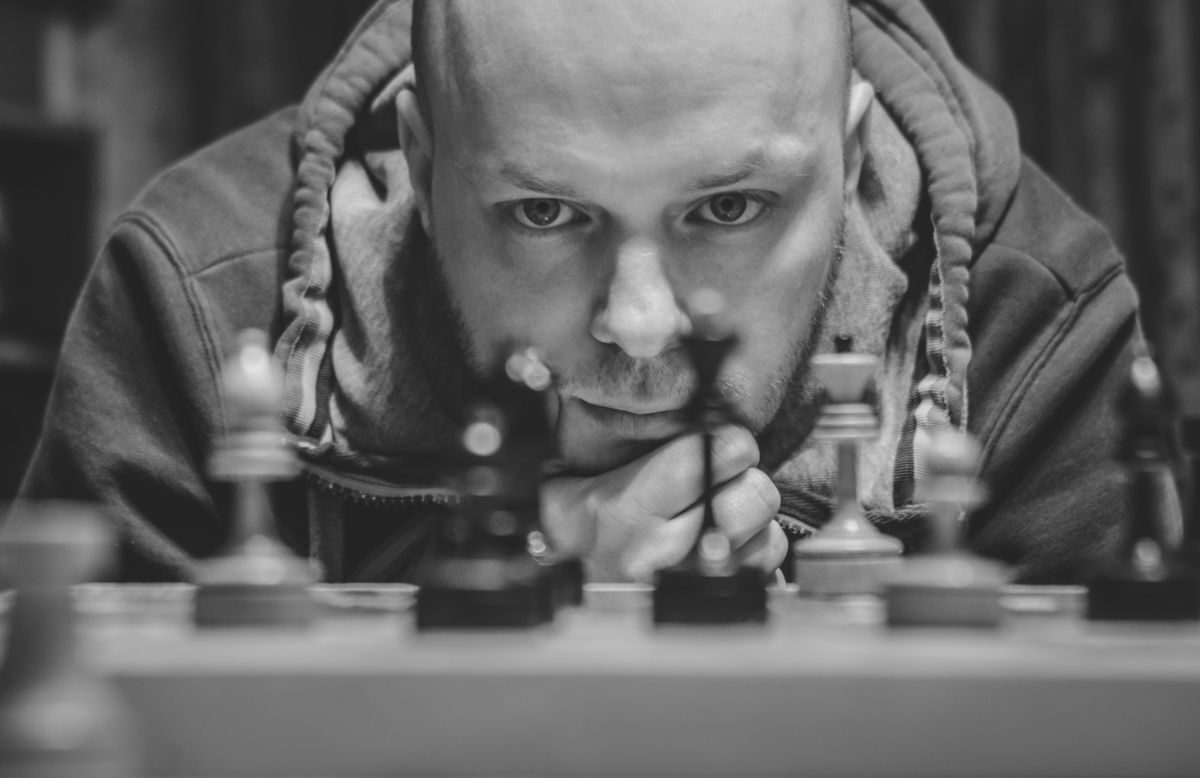
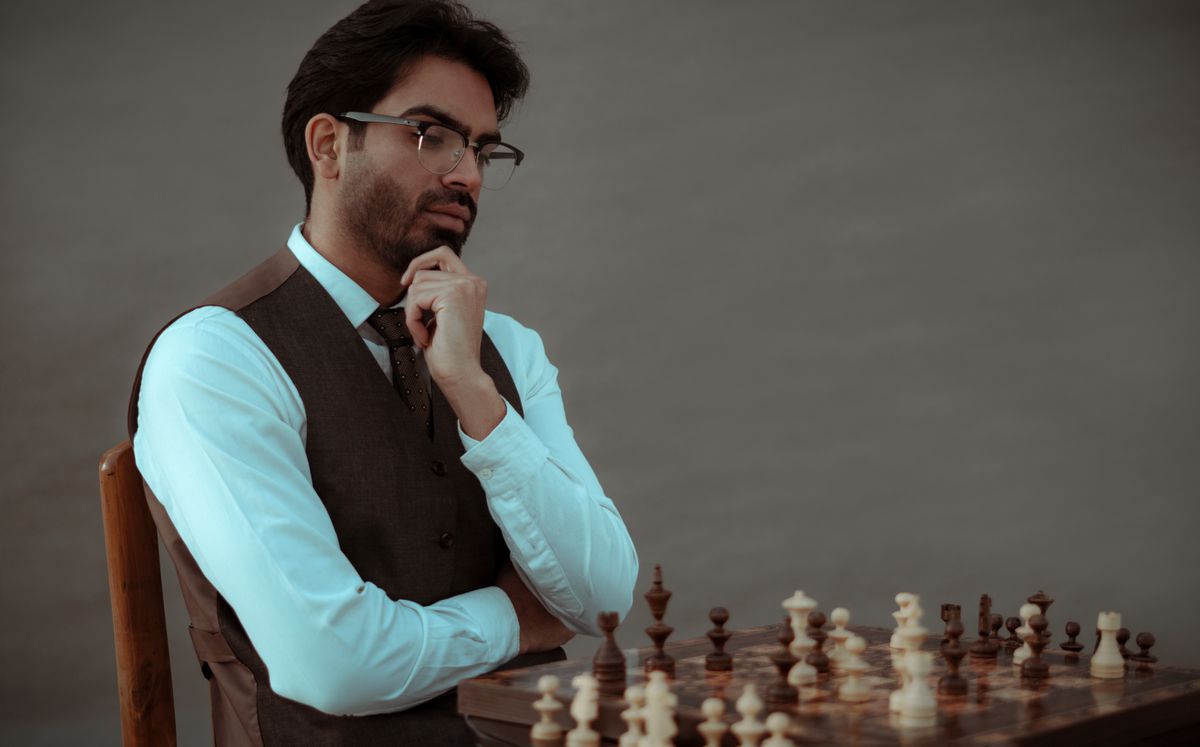
In one chess group, a player was noted to have a fairly clear private code: rubbing the ear and touching the nose when unsure; steepling when he had a counter ready; covering the mouth or scratching the neck when displeased. Once the whole group had learnt the code, most of them started beating him. This is both a demonstration of the power of the baseline and a warning for chapter 29.
Zone 3 reading matrix
⚠️ Read only once the threshold has been crossed. Every row in the table below carries data only when the other person has left their own baseline — chapter 06. Inside the mute band, those same behaviours carry zero bits. And once the threshold has been crossed, they still give only sign, intensity, timing — not content (chapter 08).
| Observation | Leading hypothesis | Must be ruled out |
|---|---|---|
| Palms up while explaining | Sincerity, openness | Someone who has practised it |
| Hands hidden in pockets or behind the back while explaining | Information held back | Cold; habit; embarrassment about the hands |
| Palm down with a pointed finger | Imposing authority | Culture — some places point with the thumb instead of the index finger |
| Abrupt reversal from palm up to palm down | Branch A or branch B | You have to run the branching tree above |
| Clenched hands, rising higher and higher | Mounting frustration, being suppressed | — |
| Trembling hands, or hiding trembling hands | Lack of confidence | Illness, coffee, cold, medication |
A standing warning — carry it through the rest of the set
The open palm is the easiest signal to fake in the whole system. Signs such as pupil dilation, sweating and flushing cannot be produced deliberately — but displaying the palms to look sincere is very easy to learn, and a great many people have learnt it.
The rule: never use an open palm as evidence of honesty. Use only its absence — hidden hands — as a pointer to dig, and only when a supporting cluster is there.
Chapter exercises
One. Run one competence-domain scan on someone you know well. Predict the result before you scan, then compare. The part you got wrong is the part you learnt from.
Two. For one week, every time you see someone steeple their hands, record the cluster immediately before it. You will see the same gesture lead to two very different outcomes.
Three. Film yourself presenting for five minutes. Count how many times you point a finger. Do it again with the fingertips brought to the thumb, and ask a listener how the two differ.
Zone 3 intervention
| Goal | Action |
|---|---|
| Raise goodwill while you are speaking | Keep the palm up or vertical. Drop the pointed index finger entirely. Replace it with the fingertips brought together against the thumb |
| Open a meeting on equal terms | Shake hands with the palm vertical, match the pressure, and let the other person decide when to stop |
| Break the hidden-hands posture | Give them an object to hold. Or spread a document out in the middle of the table and ask a question that forces them to point at it |
| Map someone's competence | The competence-domain scan — five to eight topics, recording the default hand position for each |
| When you see their hands clenched high | Lower the pressure. Change the topic. Do not put a proposal in this state — it will be refused and you lose the chance to put it again |
| ⚠️ Conditional use | The three-second elbow touch. Highly effective, but subject to rule 1: not in a context with a power gap, and not when you are unsure |
Chapter summary
- Three independent reasons make the hands the richest source of information: more nerve fibres link the hands to the brain than any other part · the hands and fingers are the most micro region and change state faster than anywhere else, so they mark the moment very precisely · and they sit in natural view, quite unlike the feet.
- The three-step scale: palm up 84% goodwill · palm down 52% · closed fist with pointed finger 28%. Same talk, same speaker, same hall — only the hand position changed. The gap between eighty-four and twenty-eight is the gap between being heard and being contradicted.
- Pointing a finger carries two further costs: listeners remember the content less well, and they switch to commenting on the speaker — “pushy”, “aggressive”, “rude”. Replace it with the fingertips brought together against the thumb: the same precision when pointing to a spot, but the audience describes it as “thoughtful”, “purposeful”, “focused”.
- Between the two extremes is the vertical position, the hand held like a blade: equality, neither side conceding — and the position that produces the highest trust in a handshake.
- The palm reversal — palms up or intermediate, then abruptly turned down mid-sentence and held there — has two and only two causes, leading to two completely opposite actions: the deception threshold, or entering a domain in which they are the expert. The two branches look identical if you watch only the hands.
- Four questions on each side to separate the branches, and they exclude each other fairly cleanly. The competence-domain branch usually comes with a firmer voice, smoother delivery, added technical detail; the deception-threshold branch does not — it comes with a discomfort cluster, desynchrony with the words, more fidgeting, a changed answer latency.
- The competence-domain scan: five to eight topics, the further apart the better, two to three minutes each, no digging, just one mark — up, vertical, down, hidden. The map you get tells you who this person thinks they are in which domain, which a CV never gets right.
- The key distinction on the map: up means “I am not good at this”, hidden means “this is where I do not want to talk”. Only one of the two is worth coming back to. For investigation, distinguishing “does not know” from “does not want to say” is the most valuable thing of all.
- The deciding detail is usually in speed and height. Rubbing the palms together fast favours the listener, slow favours the one making the gesture. The higher the clenched hands, the greater the frustration; the higher the wrist grip behind the back, the greater the anger.
- Steepling is the exception to the cluster law, but it still has to be read against the cluster before it: after a positive cluster it means “go ahead and propose”, after a negative one it is confidence in refusing. It tells you the level of confidence, not what the confidence is about.
- The open palm is the easiest signal to fake in the whole system. Never use it as evidence of honesty. Use only its absence — hidden hands — as a pointer to dig, and only when a supporting cluster is there.